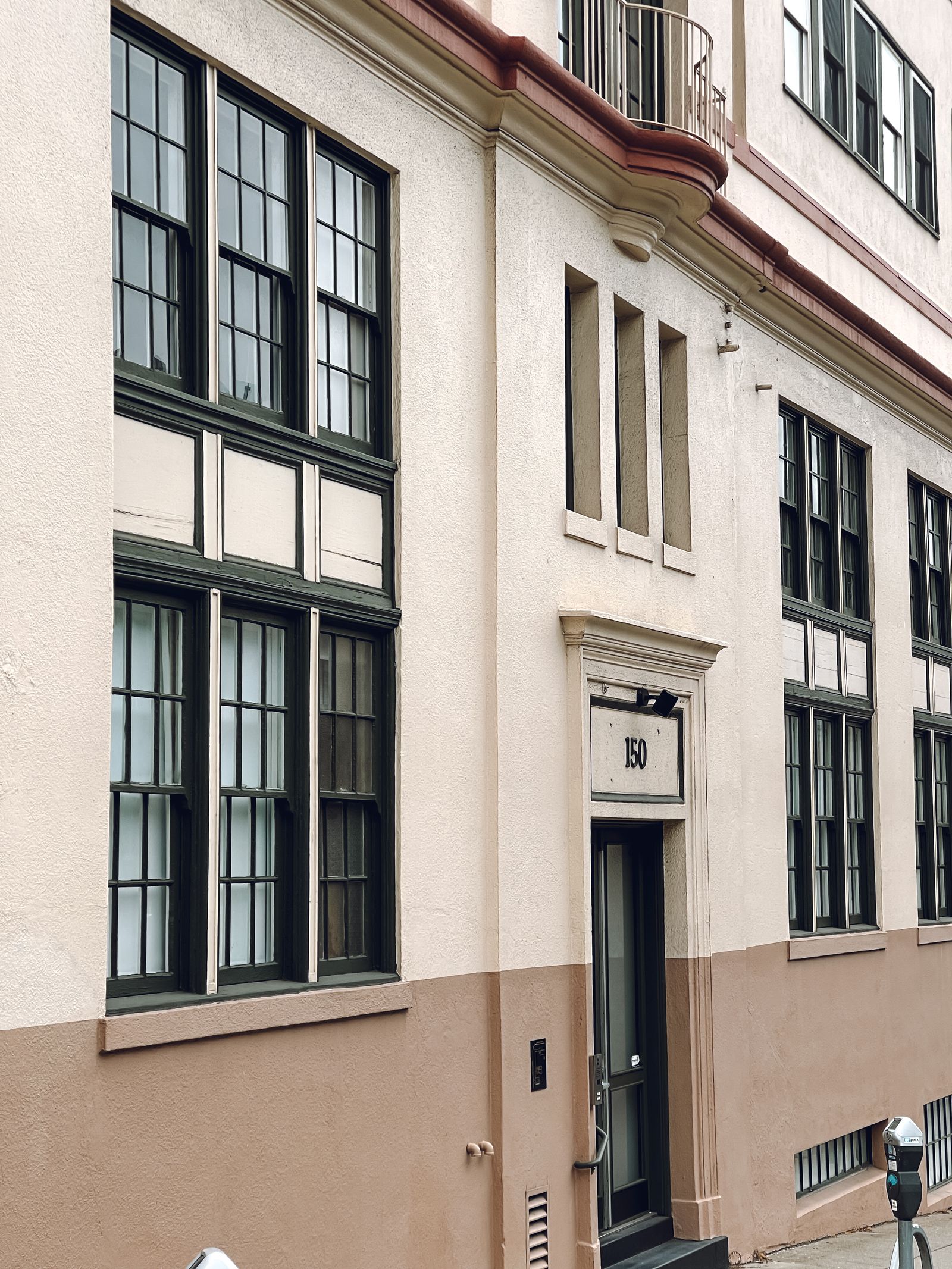
Soft washing uses chemistry and control
Commercial soft washing generally uses compatible cleaning chemistry, controlled dwell time, and a lower-pressure rinse to loosen and remove suitable organic growth, pollen, bird residue, atmospheric film, and ordinary exterior soil. The low-pressure label does not make the process automatically harmless. Chemistry can affect vegetation, metals, coatings, sealants, glass, and nearby water. Dwell time, concentration, temperature, sun, wind, and rinse volume change the result. An Erie quote should identify the material, test area, protection, rinse, water path, and expected finish for each elevation.
Soft washing may fit broad compatible wall areas where an owner wants an even maintenance appearance without aggressive mechanical force. It is not a substitute for bonded mineral deposits, salt crust, oxidation, rust, embedded exhaust, failed coatings, or recurring moisture that requires another treatment or repair. It also does not diagnose a leaking roof edge, open joint, cracked facade, or failed drainage detail. If a stain returns below a downspout or parapet, the source may need correction before repeated cleaning can provide durable improvement.
- Potential fit: compatible organic growth, pollen, bird residue, and ordinary atmospheric soil.
- Confirm chemistry and dwell against masonry, stone, concrete, glass, coatings, metal, EIFS, and landscaping.
- Separate cleaning from repair, restoration, glass detailing, and envelope investigation.
- Use a test area when the substrate, coating, stain, or expected finish is uncertain.
Controlled pressure can serve durable Erie zones
Pressure washing can have a role on durable, compatible surfaces and localized deposits when pressure at the surface, flow, nozzle, distance, angle, overspray, and runoff are controlled. Selected concrete aprons, curbs, service yards, loading areas, and some hardscape may tolerate controlled pressure after review. A Peach Street retail walk may have durable pavement while its storefront glass, painted sign bands, joints, and landscaping need another approach. An industrial apron may tolerate measured mechanical cleaning while a nearby brick wall, coating, or sealant does not.
Too much force can etch concrete, remove mortar, disturb sealants, lift paint, mark EIFS, expose aggregate, or drive water behind panels and openings. Downtown masonry deserves caution because age, repointing, prior repairs, and weathered surfaces may vary across one elevation. A Bayfront or port-corridor facade may also have exposed metal, wind-driven grime, or corrosion-sensitive details. Pressure may be appropriate for one evaluated hardscape zone and inappropriate for the facade above it. A test area, measured result, protection plan, and defined exclusion are more useful than a blanket promise to pressure wash the entire building.
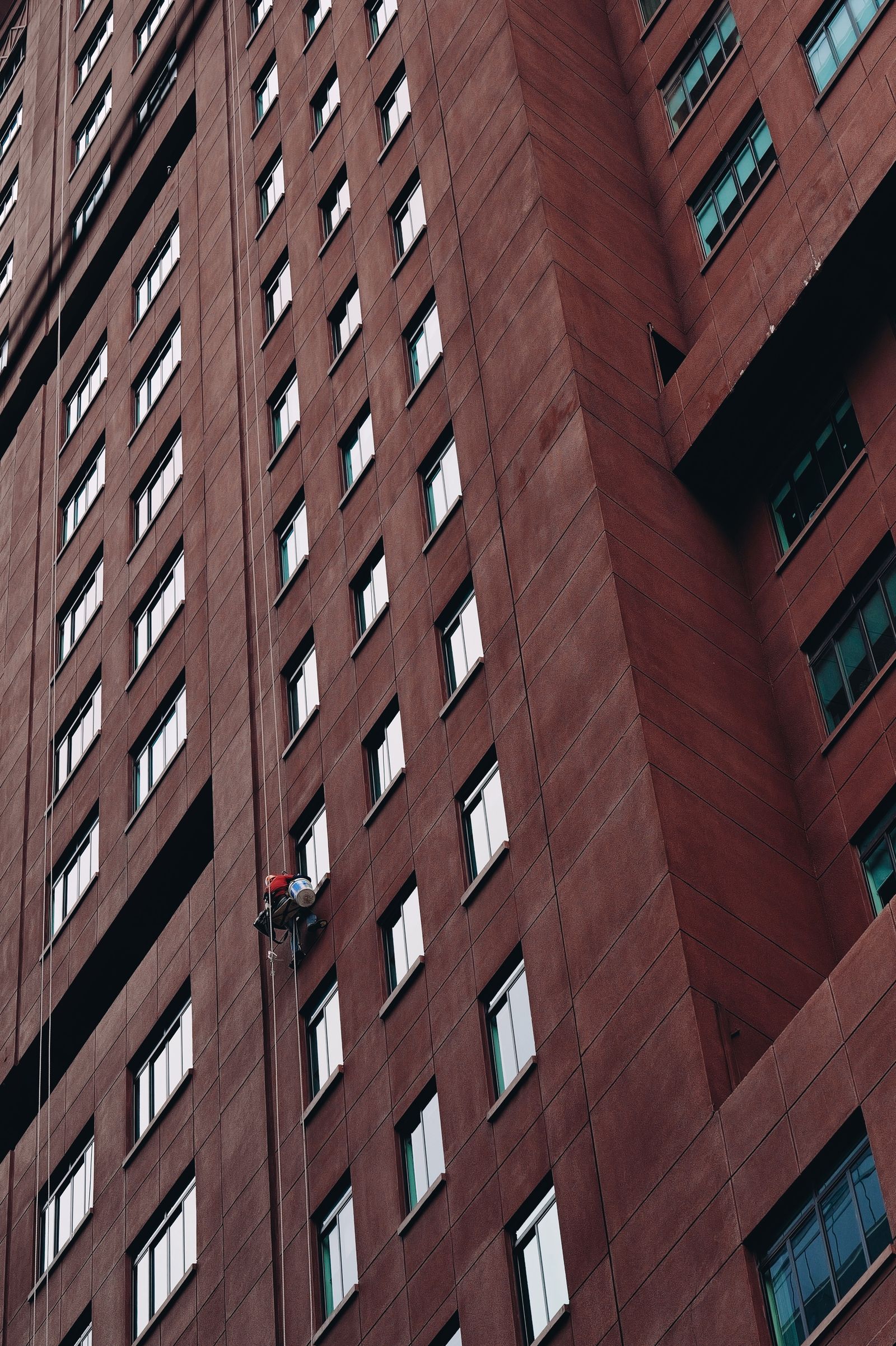
Compare Erie conditions before choosing
Downtown and Bayfront sites require attention to sidewalks, public movement, storefronts, masonry, narrow staging, deliveries, events, exposed wind, and active entrances. Peach Street retail sites can have customer traffic, parking islands, signs, awnings, glass, restaurants, and shared stormwater paths. Medical properties require patient, visitor, staff, security, air-intake, and emergency-route coordination. Industrial and port corridors can add trailers, fleet traffic, utilities, loading bays, shift changes, dust, and large drainage areas. The use of the building changes the safe sequence as much as the stain does.
Lake-effect snow and regional weather affect timing and appearance. Humidity and shade can support recurring growth; storms can move film and debris; spring pollen can make a result look temporary; winter salt can leave white residue at curbs and entrances; and freeze-thaw cycles can expose weak mortar, open joints, spalled concrete, or failed sealants. Water can become an icing issue on ramps, garage entrances, and shaded pavement. A workable plan names pause conditions for wind, rain, lightning, temperature, snow, ice, visibility, drying time, and loss of spray control. It also explains how water, product, soil load, and rinse volume will be diverted, collected, recovered, filtered, or disposed of as the site requires.
Where aerial or high-access assistance fits
For an Erie property, drone-assisted application or rinsing may fit a broad, compatible upper elevation when the team can establish a launch area, line of sight, safe stand-off, spray control, and ground protection. That can reduce some lift repositioning around a parapet or sign band. It is not a substitute for close glass detailing, bonded-deposit removal, facade inspection, repairs, or direct-contact work. The right comparison is elevation by elevation, not simply tall versus short.
Erie utility lines, trees, balconies, public streets, Bayfront wind, neighboring buildings, medical activity, and industrial security conditions can make an aerial plan unsuitable on one side and workable on another. Commercial drone operations must follow current FAA requirements, including applicable airspace and operating rules. Property authorization and aviation authorization are separate questions. If separation from people, vehicles, wires, or adjacent property cannot be maintained, the scope should change to pole, lift, hand work, a different sequence, or a later date. A clear proposal lists aerial zones, conventional zones, exclusions, controls, and fallback options.
- Use aerial assistance only for site-approved upper zones with controllable ground conditions.
- Use poles, lifts, or hand work where close contact, agitation, scraping, or squeegee finish is required.
- Review FAA, weather, security, wind, and local site conditions before confirming a flight-dependent scope.
- Document a fallback method or exclusion instead of implying universal coverage.
Use the quote to define finish and responsibility
A useful Erie proposal should identify the material and soil on each priority elevation, selected method, test-area expectations, chemistry and rinse assumptions, access approach, weather limits, controls, drainage plan, operating window, closeout photographs, and exclusions. It should distinguish routine washing from hard-water removal, salt treatment, oxidation treatment, construction cleanup, graffiti removal, glass restoration, coating work, masonry repair, and envelope investigation. A clear scope lets an owner compare bids that may use different words for very different work.
Share the address, photos, approximate height, target elevations, known materials, visible stains, entrances, water access, nearby drains, parking or loading restrictions, event dates, and desired finish. Tell us whether the site is an office, hotel, retail center, medical facility, school, garage, warehouse, industrial building, port-adjacent property, or mixed-use site. Those details help determine whether a remote review, site visit, test area, or hybrid plan is appropriate and reduce the chance that a proposal assumes an access route or drainage path the property cannot provide.
Drone Building Cleaners can help compare soft washing, controlled pressure, high-access rinsing, pole work, lift access, hand detail, and recurring exterior maintenance for Erie properties. Call +1 239-351-2897, email contact@dronebuildingcleaners.com, or use the quote form. We will explain what the proposed method is intended to improve, where another method may be needed, and what conditions must be confirmed before scheduling.